Friday, April 25, 2008

Dino Dino Dinosaursssss


(There are a great number of different kinds of dinosaurs that once roamed the earth.)


According to the Oxford American Dictionary, a museum is “a building in which objects of historical, scientific, artistic, or cultural interest are stored and exhibited.” There are thousands and thousands of museums around the world, some similar, some entirely different, all presenting a vast amount of information on the topic concerned. Museums “can stimulate critical thinking skills” (TMM 225) and provide an interesting learning environment for the students.

Our visit to the Texas Memorial Museum did a number of things for me. I will focus on the main idea that was sparked through the visit: I wish dinosaurs were still alive.

Over 65 million years ago, large herbivores and carnivores roamed the land that we now call our home. From flying species to those that swam through the ocean to those that demolished everything in their path, these creatures were the dominating subjects. Now, centuries later, paleontologists spend year after year uncovering the remains of these great creatures. In the Texas Memorial Museum, we saw the largest dinosaur remains found in the state of Texas. It was a flying creature, a Pterosaur (pictured) , hovering above us, "the largest flying creature ever discover" (TMM 226). Its head was probably about 4 feet long with a gigantic jaw structure. Seeing the fossil of this mammoth of a beast was fascinating to me. Yes, I had seen fossils previously, however with the mood I was in, the other fossils in the building, and the enthusiasm about the topic from Bump and the other students, my interest in these creatures soared. I decided I want a pet dinosaur. (This is a Tyrannosaurus Rex, one of the fiercest and most terrifying dinosaur to roam the planet.) Now, this seems like a very unrealistic desire, but you still have to dream. If I were to own a pet dinosaur, it would most likely be a Triceratops, like the one pictured to the right. You may be thinking, “Why in the world would Logan want a Triceratops? It has horns and can be mean and very well may demolish her.” I believe, however, that a Triceratops would be the perfect dinosaur friend. He (I would want a boy) would protect me, scaring off all of the other dinosaurs that would want to eat me alive, such as the Tyrannosaurus Rex. Triceratops, with their three horns, look extremely fierce and would be completely capable of protecting me. But don’t let his looks intimidate you. I know that if I were to have Charlie (that would be my dinosaur’s name) as a pet, we would bond and create an everlasting relationship. Our friendship would deepen as our years together went on, and I would the break the barrier between species. Rather than dogs being a man’s best friend, I believe dinosaurs would take the place of man’s best friend.

This may seem like a ridiculous topic for a discussion board, but dinosaurs are not only a part of the past, but they are part of the present. With the technology today, it wouldn’t be out of the question to replicate the DNA of a species of dinosaur and somehow bring one to life. Of course if that were to happen, I would be first on the list to claim him as my pet.


(This would be a super fun picture to color if anyone who reads this is so inclined.)


Basically, I now love dinosaurs. Much more than I did before. And because of that, I know that I will, in my spare time, make another trip to the Texas Memorial Museum to absorb more information on this fascinating species and enjoy the marvels of our past.


(My Triceratops will protect me from being eaten by T-rex! RAWWWWRRRRRRRRR!!!!!)

Wednesday, April 9, 2008

Fitting In When Its Nearly Impossible


(Finding a place to fit in can be a difficult talk and can cause some people to reach out for help from others.)

The essays written by Asian-Americans and their experiences dealing with sexual orientation and gender identification are hard for me to relate to. I am a white, heterosexual female. Although I am Swedish, Czechoslovakian, German and Scottish, I identify myself as an American. I don’t have any gay or lesbian relatives so I have not dealt with this directly in my family. A good friend of mine, however, dealt with and is still dealing with the fact that he is gay and revealing this to his family.

When I first met Johnny*, he was not openly gay. He is a tall, handsome, intelligent business student with big goals and the ambition to accomplish them. He and my sister, Adrian, were best friends. They met their freshman year of college and had been extremely close since. I first met him my junior year of high school when I came to visit my sister. He was friendly and cute but I didn’t spend much time with him. Senior year, I came to Austin to celebrate my eighteenth birthday with my sister and some of her friends. He was there, and we hung out quite a bit, which I consider to be the true beginning of our friendship. From there on out, we talked often, saw each other with and with out my sister, and began to get to know each other more.

He and my sister were better friends, and he confided in her more often, so when she came to me and told me that he had come out and was gay, I wasn’t surprised. In all honestly, we had assumed just as much from certain comments and actions, although we weren’t certain. My sister described the night that he came out:

He was leaving the following day to go to Hong Kong for a semester and she was staying with him at his house to spend the last night before he left.
(The Gay Pride Parade in NYC is an event that shows great support for the gay community.) As they sat there, he told her that he had something to say: he was gay. He then began to cry. He continued crying for quite awhile, explaining that he hadn’t told anyone else and was still not sure how to tell people. Over the next few months, he told more and more people, but still kept the knowledge to a limited group.

As a business student, he feels that he will be potentially hurting his career and future success by revealing this vulnerable part of his being. When reading the essays, I was intrigued by Vincent Ng’s story of his experience with revealing his homosexuality. He describes his participation in a play for “Theater of the Oppressed” and his role as Derek, a gay male attempting to fit in with his homosexuality. Vincent “knew that in many ways the young man’s struggles to gain acceptance, recognition, and attention from his peer group were no doubt experiences that paralleled [his] own life” (Ng 880). Fearing his parents’ reaction, he was unsure of how to present to them that he was gay.

The struggle with homosexuality is difficult on its own. (Asian Americans are a big part of American society and must contribute while still maintaining their culture.) Now imagine adding to that an uncertainty about where you fit in within culture groups. The students who wrote these essays all have feelings of being oppressed in some way by homosexuality and/or ethnic background.

As a society, we must take steps to relieve these feelings that so many are experiencing. We must accept those who are different from the general public. America is the “melting pot” of cultures and is meant to be an accepting nation. We need to take others in and allow them to “selectively assimilate in order to retain [their] rich culture” (Andrade 852).

Raise Your Voice Against Violence


(Take Back The Night is a chance for people, both men and women, to speak out about sexual violence.)


I had not planned to attend “Take Back the Night.” After all, I had class till five, then work out, then dinner, then an Absolute Texxas meeting, then rehearsal for an orientation skit followed by an night of studying and attempting to get everything done before my busy weekend. How was I to make time go to this event?

Well, as I was walking to Starbucks from my rehearsal, I saw the tower glowing orange in the clear sky. As I walked up the South Mall, I wondered what had happened to constitute lighting it orange. As I walked up the steps towards the tower, I saw a great congregation of people, some sitting and some standing, listening to a man speak who was standing near the base of the tower steps. Lots of people were wearing blue shirts with “VAV” on them.
(VAV stands for Voices Against Violence). I remembered that “Take Back the Night” was going on, so I decided to take a moment to listen.

I found a spot on the ground towards the front and listened. By the time I got up there, the man who had been speaking was now finished and the microphone stood alone. A moment later, a girl with strawberry blonde hair, a pretty floral dress and a sad face approached the microphone. She began her story…

She had been raped. At her eighteenth birthday party, one of her best guy friends took advantage of her, convincing her to drink excessive amounts of alcohol while remaining relatively sober himself, and then having her way with him. She described the experience afterwards, the pain she has gone through, the difficulty of speaking up about such a horrible crime. Everyone sat watching…listening…sympathizing (or at least attempting to)…and at least for me, trying to imagine how anything so horrible could happen to someone.

Next came a girl who, like me, was only passing through when she decided to stop and listen, but she still had a story to tell. Her sister had been raped by a family friend at the age of seven. This girl had not found out about this until her sister was eighteen years old. She described the guilt that she felt as a sibling, thinking she should have done something to keep her sister away. She should have noticed that it wasn’t right for a seven year old girl to be working with and in close contact with an old man, her rapist.

After this, up to the microphone walked a woman holding hands with a man. She began to speak. After graduating college, she had been accepted into a rotary masters program in Ecuador and given a full scholarship. She had chosen to wait until marriage to have sex and wasn’t going to give that up. On one of there weekend trips in Ecuador, a guy she had been dating, who was completely aware of her intentions to remain a virgin, raped her. She didn’t tell the police immediately, but he raped her again. She told one of her friends but not much action was taken. She began to suffer mentally and decided to go to the police. The Ecuadorian police were completely unhelpful and, in fact, worsened her situation. They laughed in her face at the accusations she made and proceeded to do nothing that would help. (Both men and women are victims of sexual violence.) This girl eventually decided to leave Ecuador and her entire program and scholarship behind to come back to the United States. Before she left, she wrote a letter to the man who had raped her and told him how wrong he was and informed him of the filed police report. Now, at twenty-seven years old, she still suffers from break downs and unpleasant memories of the events that occurred. Her boyfriend, the man who accompanied her to the stage, is a constant source of support for her and has helped her regain her confidence and strength.

One of the girls who spoke said this of having being raped after the first semester of freshman year: “I had a semester of being a regular college student and then it was al down hill.” Hearing this, I realized that she was my age when she was dealing with the aftermath of being sexually assaulted. I cannot begin to imagine going through that and honestly, didn’t really think about it much before hearing these monologues.

Listening opened my mind up to the harsh realities that surround us and exposed me to the dangers that I face every day and will continue to face for the rest of my life. (It is important for me and other students to be safe and do all we can to reduce the risk of being a victim of sexual violence.) I have a great amount of respect for those who were able to get up and share their stories with the group. It is wonderful that as a school, a community, a nation, a world we are raising awareness of sexual violence and seeking to relight the flame in those who have been taken advantage of. This is an extremely important cause and I am grateful that I took the time to stop and listen to this tragic stories.

Tuesday, April 8, 2008

Are You Good Enough?


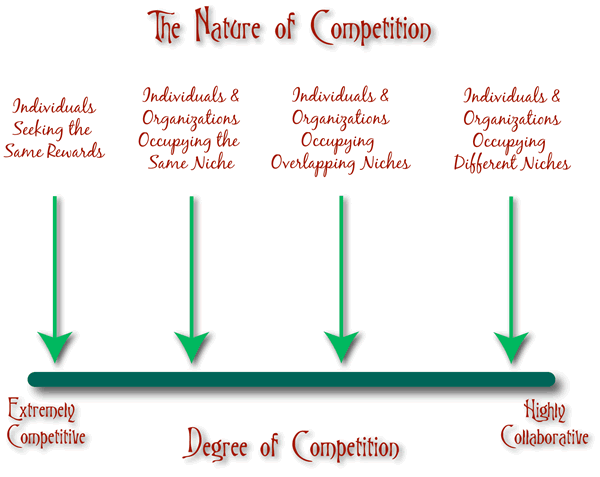
(Unfortunately, when applying to college, we are often individuals seeking to occupy the same niche, leading to a feeling of never being good enough.)

In today’s day and age, equality amongst men and women is assumed to exist. Many believe we have come so far from male dominance that we do not need to make any adjustments or acknowledgements of the still present gender differences that exist.

Applying for college has turned into one of the most stressful processes that children have to go through. It seems that “being an amazing girl often doesn't feel like enough these days when you're competing with all the other amazing girls around the country who are applying to the same elite colleges that you have been encouraged to aspire to practically all your life” (Female Perfectionism). It is not only a being compared to students in your school, city or state but to students throughout the nation. Who has higher SAT scores? ACT scores? Better GPA? Who played sports and did better in those sports? Who completed more hours of community service? Who was involved and held a leadership position in the most organizations? These are all questions asked by admissions counselors when considering whom to admit to their college or university.

When applying to college, I felt extremely well qualified. I was in the top 10% of my class. I was in Gifted and Talented and Advanced Placement classes.
(This is the girls high school swim team my junior year.) I was a swimmer for 12 years, four of those years swimming for both my high school varsity swim team and my club swim team. I was a cofounder of the chapter of Students Against Destructive Decisions (SADD) at my high school as well as president. I was a Peer Assistant Leader for 2 years, and the list goes on. I was basically involved in a ton of activities and served in many leadership roles. What school wouldn’t want me? That may sound conceited but in all honesty, that is how I felt.

I have two very successful parents and “admission to a brand-name college is viewed by many parents, and their children, as holding the best promise of professional success and economic well-being in an increasingly competitive world” (Female Perfectionism). My parents were not entirely different from the rest of the parent population. They hoped that I would choose a topnotch school to fuel my education and thrust me into a successful future. I applied to UT, Michigan, Kalamazoo College, UCLA, UC Davis and Berkeley. (Harvard is one of the schools that I did not even bother applying to.) I knew full well that I would not have the money to go and probably would not get into an ivy league considering their ridiculously high standards.

I often wondered what my outward appearance says about me; I “wondered what they saw and what they thought when they looked at her like that” (Kingston 131). Do I appear to be an outgoing and actively involved student who cares a great deal about my studies? The colleges don’t see me. They see a sheet of paper that is supposed to define me—my activities, grades, hopes for the future, everything. My life and college choice are determined by a few sheets of paper.

(No matter where each one of us ends up, we should strive to do all that is illustrated in this picture.) I still wonder what Berkeley and UCLA decided they didn’t like about me when they rejected my admissions to the university. I probably would not have gone to either of those schools, however the rejection stung. Still, being accepted would have put a smile on my face and been a “mental reward” for my hard work. This “never good enough” competition will continue through college and into medical school admissions. I am already working on building my resume for med school and hope that I am competitive when it comes time to apply.

Wednesday, April 2, 2008

Changes to be Made


(We cannot allow patient care to become impersonal as many things have.)

It seems that we have talked a lot about the need for compassion in medicine these days. Some claim that the “role as caregivers is to help relieve suffering in whatever way it arises, whether physical or mental” (Rinpoche 171). But is this really the case? How much do we and should we really expect from doctors when it comes to emotional support? Is it really a doctor’s responsibility to be our support system and encourager or simply a source of knowledge and expertise? Where do we draw the line between a doctor’s role as a professional and their role as a “counselor”? These are all questions that have arisen in my mind since beginning the discussion of compassion in medicine.

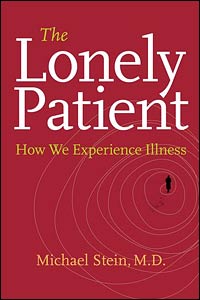
In my last entry about compassion in medicine, I discussed the role my skin doctor played when diagnosing me with psoriasis. Lacking emotion, I felt disconnected and uncared for. I switched doctors and found a doctor I was satisfied with. I felt at the time, and still feel, that this was a wise and fair decision. I had no loyalty to the doctor with an attitude. In this case, the line was clear as to how I was treated as opposed to how I should have been treated. In “The Lonely Patient,” the author, Michael Stein (great book!!) discusses the dilemma he faced when asked to visit one of his patients at home. It was not because it did not care about the patient. In fact, it was quite the opposite. Stein cared so much for his patient that he felt he would be intruding on his space. This brought up the idea that perhaps it isn’t a lack of compassion, but merely the lack of knowing where to draw that line.

This day and age, a person, no matter what profession, must be careful of how far they go with interacting with others. A teacher who reaches for a student can be fired for harassment. A boss who innocently comments on the appearance of an employee can be fired for inappropriate relations with a worker. (Is this appropriate?) Basically, anything one does can be misconstrued and held against them. It is an extremely unfortunate situation that this world has gotten into, and it is has spread into the medical field. Many doctors “believe that medical work demands some sort of distance, or at least the appearance of it” [1] and refuse to hug their patients. Why? Hugging is harmless—right??

If another doctor would to suggest a change in behavior or an increase in caring, they may receive an extremely negative reaction from the other. Often times, “others in positions of responsibility may have the attitude of not wanting to listen to others, confident that their own opinion is best” (Rinpoche 107). If one grows up with the idea that doctors are their simply for their knowledge, changing this mentality would be difficult to nearly impossible.

How can we develop future doctors with the idea that compassion and caring is necessary in the medical field? I believe it begins in the education system, an area that we can change. (We must introduce the idea of caring to the youth.) We cannot change the way future doctors are raised in terms of how their parents present ideas to them. We can, however, insert more compassion and courses about compassion into the education system. Perhaps along with organic chemistry and genetics, pre-med students should be required to take a “Compassion and Medicine” course that introduces these ideas to them. This may allow for a more caring and concerned generation of doctors.

[1] Michael Stein, The Lonely Patient (New York: Harpercollins Publishers, 2007) 171

Saturday, March 22, 2008

Beauty is in the "EYE" of the Beholder


(Focus in on this!)

“You always want what you can’t have.” That is a phrase I have heard as far back as I can remember. And so far, it seems to apply to many and most situations. The guy always chases after the girl that is “out of his league.” The girl always wants to newest Gucci bag that only the wealthiest celebrities can afford. The little kid wants the toy that his best friend bragged about on the playground even though he himself just got a new toy. And in Toni Morrison’s The Bluest Eye, Pecola wants nothing more than to have the bluest eyes around and rid herself of her natural brown eyes. When Elihue Micah Whitcomb asks Pecola how he can help her, she exclaims that she wants him to help her with her eyes. He replies “’What about your eyes?’ [she says] ‘I want them blue’” (Morrison 174). Pecola’s situation brought my thoughts to the celebrity life and the impact it has on the common folk.

There is currently a standard look in Hollywood that will make you famous, attractive and successful. It seems “adults, older girls, shops, magazines, newspapers, window signs – all the world had agreed that a blue-eyed, yellow-haired, pink-skinned doll was what every girl child treasured” (20). Look at the trend: Jessica Simpson, Britney Spears (when she was blonde), Kirsten Dunst, Kate Hudson, Cameron Diaz, Scarlett Johansson, and the list goes on. (Pictured is the beautiful Kate Hudson--considered to be one of the most attractive in Hollywood today.) These are the current A-listers, most photographed and most gorgeous girls in the Hollywood Hills. And they all follow the same look.

You must wonder then what effect this has on all of us…”us” meaning the young girls from all over the nation that do not make millions of dollars a year and star in box office hits. This trend from Hollywood flows down to us and puts an image in our mind of what we should look like. I’m not saying blonde hair is better than brown (although I am a little biased), but how often do you see brunettes dying their hair blonde? ALL THE TIME! How often do you see blondes dying their hair brown? Not as often.

We have this picture in our mind that blonde hair, blue eyes and perfect skin is the definition of beauty. Another component of this beauty has become body size. Nearly every week you can read the magazines about some celebrity being too fat and two weeks later they claim she is anorexic and needs to go to rehab. There is this imagined “perfect” body type that few people really have yet many desire. (Sometimes people cannot distinguish between reality and the imagined.) The result of this is seen in not only the celebrity world but all over the country. Girl after girl and woman after woman suffers from bulimia or anorexia due to an unreasonable feeling of obesity. They want what they don’t have, just as Pecola wanted blue eyes rather than brown eyes.

Even when we have what we think others want, we still have insecurity and uncertainty about the perception other have of us. Pecola, after believing she has blue eyes, exclaims “Just because I got blue eyes, bluer than theirs, they’re prejudiced” (Morrison 197). Once again, dissatisfaction arises.

To combat this, we must introduce a feeling of satisfaction. (Which of these is beautiful to you? ..key word: YOU) Rather than continually trying to change and become what we are not, we must accept what we are and be content with it. I find myself doing the same thing that Pecola did and that many people around the world do. Sometimes I think I’m too short, or should be thinner, or have blonder hair, or “bluer eyes” (Morrison 202). But if I sit back and look at the different people who pass by, I realize that each is beautiful in their own special way and that "preference for certain colors and shapes varies" (Bump 193). No, not everyone looks the same—but that makes each and every one of us beautiful…in our own way.

Tuesday, March 18, 2008

He Loves Me...He Loves Me Not...


(Doctors can either bring love or hate to the lives of the patients.)

I have mixed feelings of the current debate and status of compassion in medicine. In some ways, I feel like the need for compassion is being more apparent and awareness is being raised. At the same time, I feel like so many professionals in the medical field are in for the wrong reason and lacking the compassion that needs to be present to successfully help their patients. In Medicine and Compassion: A Tibetan Lama’s Guidance for Caregivers, the authors discuss the current need for compassion in the medical field in regards to patient interactions.

About three years ago, I had a large white patch on my elbow. I did was unsure of what this may be, so I went to my dermatologist, Dr. Miller. Upon seeing the patch, he assured me that it was a wart and proceeded to try to burn it off. It did not go away. He tried again to burn it off.
(Pictured is a patch of psoriasis similar to the one I found on my elbow.) And it still did not go away. At this point, I was frustrated, sick of getting liquid nitrogen poured on my arm with no avail and ready to move on to another doctor. Dr. Miller had been incompetent and although he was friendly, he was unable to diagnose me correctly. I then moved on to Dr. Francis and boy was that a mistake!

The minute I walked into Dr. Francis’ office, an office assistant who was not particularly friendly handed me a ridiculously large stack of papers to fill out before I would be on the list to be seen. A half hour later, I was taken to the back and sat in a room to wait for the doctor. Finally, Dr. Francis came in. He was an older gentleman, slightly overweight, not particularly good looking for his age. He was hairy and quickly introduced himself, then diving right into my problem. He looked at my arm and with few questions asked of me, he diagnosed me with psoriasis. Psoriasis is an overproduction of skin cells that results in patches of itchy, often times scaly skin. This is what the white patch on my arm had been—not a wart. Despite his knowledge of dermatology and ability to successfully diagnose my skin condition, his attitude and personality was extremely negative. I remember sitting the room with him, slightly shocked about the skin condition I was just told I had, while he blew off my concerns and questions. My sister was with me too and was concerned as well. Her concerned were dismissed with mine.

We walked out of that doctors office and never returned. Commonly, “ when patients are seriously ill, their physical situation may be amplified by a lot of anguish and fear. They develop a great deal of hope that the doctor will be able to help them, but the hope is countered by the fear that nothing can be done, that perhaps the situation is hopeless” (31). Although psoriasis is not terminal, it is chronic and is seen in only 2-5% of the population.
In severe cases (such as the one pictured), psoriasis can cover the patient’s entire body causing them to experience discomfort and embarrassment to go in public. This was enough to stir up a bit of concern within me. Dr. Francis did nothing to ease this concern.

I have since found a new dermatologist, my friend’s father, Dr. Pederson, who is extremely knowledgeable, reliable, AND compassionate. He knows that “to truly help peoople suffer less, we need to combine our knowledge and medical skills with a compassionate attitude that helps the patient relax and have confidence in their care” (171). This knowledge has turned him into a superb doctor who can connect with his patients and truly make a difference.

I have realized that “clarity and purity allows the mind to have a greater impact on others” (71). With the intent on going into the medical field, it is important for me to understand how I can connect with my patients most effectively. I am grateful that I have come into contact with both compassionate and uncaring doctors so I can better understand the kind of doctor I want to be when the time comes.

Monday, March 17, 2008

Tick Tock Tick Tock..when the time comes.


(Who's hand will you reach out to hold when they need you?)

As I write this, I am sitting in the hospital waiting room of the Methodist Children’s Hospital. My 15 year old brother was diagnosed with appendicitis (in picture) this morning and is currently in the operating room getting his appendix removed. After the abundance of health issues that have presented themselves to my family over the past two years, I’m not sure what else could go wrong.

Removal of the appendix is a fairly standard surgery; the surgeon said he does between 12 and 15 appendix removals a week. And still, with the requirement of general anesthesia, the surgery possesses a certain degree of risk. As we sit and wait for the doctors to come in and tell us its ok, I think back on how to people in my family have dealt with various illnesses.

My mind first wandered to my grandmother’s situation that began over 2 years ago. Mamoo was the first in my family to be diagnosed with cancer. She was told in Fall of 2005 that she had breast cancer and would have to undergo surgery. This was a huge shock for my family and frightened us all immensely. We had never experienced cancer so close to home and now it was knocking at the door, on its way in. Mamoo, I must say, is one of the most compassionate, kind and genuine people I have known. She has spent her life taking care of my grandpa, Pawpaw, and their children and likes nothing better than bringing a smile to the faces of her loved ones. She was not used to being taken care of, so it was a change for her to step back and allow others to help her. (Breast cancer ribbon pictured is a symbol of strength and hope of a cure in the face of such a devastating disease.) A few months later, after her cancer had gone into remission and she was feeling well again, my grandpa and aunt were both diagnosed with cancer. Her role changed dramatically. During her cancer, Mamoo “had to be helped. Now, what [she is] ready for is support, for a process [she has] set in motion ourselves. So [she] reached out and received it eagerly” (146). She had to accept the changing of roles and readily take on the task of once again, being the caregiver.

In the wake of the medical turmoil that has encompassed my family, I often wonder what lies ahead for us. I have mentioned before that it is no longer a question of “if” as much as it is a question of “when” the disease or illness will catch up to me. This is a fairly depressing thought, however also fairly realistic. Thinking about this can drive you crazy. It could drive anyone crazy. We live in a world where people live their lives as if they are invincible; nothing can happen to them. But I know this is not true. I do not know what lies ahead but “if we accept Not Knowing, we’ll be less likely to get caught in models or theories, or attached to seeing things work out the way we’d like…our willingness to accept the unknown gives us courage. We can trip, fall, get lost…and still get up again and look around and start out once more” (208). Through this accepting, I can live my life with a certain degree of comfort, knowing that no matter what happens, I can make the best of the time I have right now. (Picture is a good mantra for life and living in the moment!)

Well, my brother’s surgery is now finished. (This is a typical post operating room.)
He is in the post-operating room, drugged up, loopy, and exhausted. In a few hours, he will be awake and chatty and ready to take on the world once again. The healing process will slow him down, but I will be there. As his sister and his friend, all is can do is “ask ‘How can I help?’ with an open heart, and then really listen” (241).

Tuesday, March 4, 2008

An Intimate Illness


(This picture represents the support my family has shown for one another during tough times.)

Up until a year and a half ago, illness was not a topic of discussion in my family, nor a topic of serious consideration. We did what was necessary to remain healthy: worked out, ate nutritious food, went to the doctor for all of our regular exams and check ups, etc. My extended family, cousins, grandparents, aunts and uncles, were extremely healthy as well. At least that is what we all thought.
In November of 2005, we received the first bit of discomforting news that my grandma had breast cancer. A mere 2 months later, within two weeks of each other,
both my grandpa and my aunt were diagnosed, leaving the family in a state of complete shock and devastation. Let’s just say, from that moment on, illness was no longer a stranger to our family. Never before had we dealt with illness of this capacity, and we were far from prepared, but we put our best foot forward and began to tackle the diseases. With all three of them living in Toledo, Ohio, five minutes away from each other, it was easy for them to look out for one another. Still, we did not know how we personally could help, plaguing us with fear, “the mind’s reaction against the inherent generosity of the heart” (Dass and Gordon 58).
My aunt’s situation worsened most rapidly. In early December of 2006 pre-diagnosis, we held an 80th birthday celebration for Pawpaw at my home in San Antonio. All of his kids came down along with their significant others and a couple of cousins. With the everyday hustle and bustle, it is often impossible to find a time to gather everyone together, and this was the first time in years. During the weeklong celebration, Nanci was noticeably different, becoming exhausted after short periods of time, not eating very much, and feeling so sick to her stomach that she had to go back to the hotel. Nanci was not accustomed to eating much, however. From a young age, she was extremely cautious about her diet and weight, a habit that would come back to haunt her and prevent her from healing properly post-surgery. Days after she left our home, she was diagnosed with cancer. I remember my mom calling me, sobbing on the other end of the line as she relayed this distressing news. After leaving the doctor’s office, Nanci, feeling too weak and broken down to walk, had to be carried by her husband, my Uncle David, into my grand parents house, where he sat her down on her father’s lap. Nanci and Pawpaw sat and cried together, holding onto the last moments before the disease and treatment would begin to take over her body and her life.
Growing up, if I got into an argument with my parents or siblings and went to bed angry, I knew that the next morning, chances are the negative feelings would have subsided and we would proceed with our day as if nothing had happened. Illness isn’t like that. I woke up the next day and my aunt, grandpa and grandma all still had cancer and all had the fight of their life ahead of them. When I first began reading “Illness as Metaphor,” by Susan Sontag, I was shocked by some of the “metaphors” and common beliefs regarding cancer and tuberculosis. How could someone believe that tuberculosis is “the disease of born victims, of sensitive, passive people who are not quite life-loving enough to survive”? Or that “cancer is a disease of insufficient passion, afflicting those who are sexually repressed, inhibited, unspontaneous, incapable of expressing anger”? [1] However, as I kept reading, I began to realize that some of the metaphors associated with cancer are common in my own beliefs and ideas too. For example, the idea that TB was a romantic disease translated in some ways to the cancer in my family. Nanci, a young, outgoing, active woman with seven children and a husband that loves her more than life itself could not possibly die a slow painful death. She couldn’t. Her husband and family would take care of her. She would fight. She would win. I knew there would be suffering and difficult times; however I could not imagine that she would actually leave this world behind. The romantic stories do not end this way. I was proven wrong. A year and a half after being diagnosed Nanci passed away, with my mom holding her hand and her children and husband by her side. Having undergone surgery and been unable to completely recover, she was in a state of fragility and vulnerability. Rarely would she stand up, eat, even keep her eyes open. It was just far too difficult a task.
Throughout her illness, my Uncle David served as her primary caretaker, coming home from work to assist her, taking her to the doctor, feeding her, helping her to the bathroom, and anything else you could think of. However he was unable to be around all of the time, having to provide for the family and run his own reality business. I was astounded by the way Aaron, Stella’s husband, in “The Caregiver” was able to be such a sturdy and consistent source of support for her. From the beginning of her battle with Alzheimer’s, Aaron was understanding of the difficulties that came along with the disease and that “every alz patient is different”. Although there were times when David was unable to be with Nanci, he knew he “[could] do more for her than anybody else” [2] and was ready to take on the challenge of accompanying her, physically and emotionally, through the battleground that lay ahead. David, as well as the rest of the family, had an extremely difficult time coping with Nanci’s illness, perhaps because as human beings, “we don’t know how to deal with our own pain and fear” (Dass and Gordon 14).
It was during this year and a half of her illness that I began to realized how self-serving the majority of our society is, including me. On a day-to-day basis, I go to MY classes, do MY homework, eat what I want, and engage in extracurricular activities of MY choosing. Since coming to college, this self-serving policy has been magnified even more. Living on my own, I don’t have to do chores or pick my brother up from school or run errands for my mom. It’s all about me. Looking back on my Aunts last few months, I realize that for her children, husband, parents, brothers and sisters, it was not longer all about them. It was now all about her. (Nanci will never leave our hearts or our minds.) They were willing to drop many of the major components of their lives to help with hers. My cousin left the University of Ohio to live at home. Another one of my cousins moved back home, switching jobs and entering into a long distance relationship with his girl friend. My grandparents began spending enormous amounts of time at my aunt’s house, bringing over dinner and goodies to keep her from having to get out of bed to cook. My mom and Nanci spoke everyday for a year and half, unless Nanci was too tired or weak to talk. The family unity that resulted from this terrible illness was incredible.
As I write this paper and reflect on the events that occurred during the past two years, I have found myself of the verge of tears many times. I think back to the days when I would ride with my aunt out to the barn to visit her horse, or the trips to the mall and to see movies. I remember the days when I could call my grandparents and hear something other than “Well, today was a tough day. Grandpa’s not feeling too well.” And I begin to wonder what the future holds, not only for my family, but also for me. I have adopted the idea that I too, given my family background and the commonality of the illness, will someday battle cancer myself. “It’s no longer a question of staying healthy, it’s a question of finding the sickness you like.” [3] Perhaps this is the kind of metaphor and stigma that Sontag is referring to—this presumption that cancer will attack you and cancer will win. I am an extremely optimistic person, however, in this area of my life, I am already assuming the worse—that I will suffer from cancer. I do retain optimism about recovery. Currently, my grandma is in remission from breast cancer, and my grandpa is fighting hard against lymphoma. The battle is a rollercoaster, one day he is feeling better, the next day he has the shakes and can barely stand up, having to get blood and hope to wake up the next day feeling better. His illness is felt by everyone in my family and continues to be a source of sadness, especially for my mom and grandma. During these times, “our hearts go out to these people, not only because of the immediate circumstances but because, intuitively, we regonize the response of mental suffering that we ourselves would experience under such conditions. Their predicament awakens our own fears of pain or loss of control” (Dass and Gordon 77).
Reading about illnesses that others have encountered and dealt with has been helpful in understanding and analyzing, in a sense, the illnesses that have struck my family. Inevitably, I will deal with illness involving my parents and will likely step in as a caregiver, a support system, and a source of optimism and love. One can never prepare for something like cancer to affect their family, however viewing it in a realistic way with the proper attitude and the acceptance of what is to come can help not only the patient, but also the loved ones in dealing with the disease and finding the meaning in the illness.


[1] Susan Sontag, Illness as Metaphor (New York: Picador, 1977), 25.
[2] Aaron Alterra, The Caregiver (Vermont: Steerforth Press, 1999), 192.
[3] Thinkexist.com, http://thinkexist.com/quotations/illness/.

UT with Alice and the Kiddos!

[1]
(Explore UT is an awesome day of fun for kids of all ages!)

I would like to begin by saying that I absolutely LOVED Explore UT!! As I drove onto campus with Ben and Bethany, the eleven and twelve year old children I babysat for the weekend, I could see their eyes light up as they saw other children walking with bags of goodies and balloons. I explained to them that Explore UT is an event set up by the University for children. Different departments set up activities and performances to introduce kids to all of the opportunities offered here at UT. On our walk to campus, we walked past a t-shirt making station, t-shirts with original paintings by the kids hanging up to dry. Nearly every child we passed wore a smile and a UT t-shirt. It was awesome.

Our first stop was Parlin 209 where the Alice in Wonderland tea party was taking place. As soon as I walked onto the second floor, I could see the crowd outside of the room and hear Professor Bump’s bellowing voice. The children and I sneaked into the room and took a seat on the floor, ready to watch the performance. [2] (This is what the children looked like during our performance.) The room was rather full with both children and adults, all on the edge of their seats with eager looks in their eyes. The performance began and immediately engaged the audience. Bethany sat next to me, her eyes glued to Alice and the other performers. Ben did not seem quite as interested initially but quickly was focused on the performance too.

I watch closely, especially the March Hare, to pick up on actions taken since I would be playing in it next. [3] This is a cartoon of the tea party) When it was my turn, I made my way to the table and Bethany accompanied Alice to the hallway to participate in the skit while Ben remained on the floor to watch. I was pleasantly surprised by the turnout at the performance and the responses by the viewers. Most seemed very intrigued and satisfied with the topic. The video of Alice in Wonderland playing the background was also a very nice touch.

Bethany seemed to enjoy participating in the skit, sitting next to me, the March Hare, and Alice. I really liked the scene we picked to perform; it was funny and represented the different personalities of the characters. My favorite character was the Mad Hatter. Conrad played this part while I was the March Hare, and he did an excellent job!! He brought the character to life and added a lot of personality. Danielle was the Dormouse, constantly falling asleep during the tea party.

My favorite part of Alice and Wonderland is the combination of reality and imagination. In reality, Alice is a young girl on her way to adulthood, exploring different paths and attempting to understand the world as it presents itself. The majority of Alice in Wonderland is a fantasy sort of land where animals talk and tea parties go on forever and ever. [4](Picture is of an LSD blotter. These oftentimes have images from Alice in Wonderland on them.) It is often said the C.S. Lewis intended for their to be drug references and hidden innuendos throughout the story, yet with or without these underlying ideas, it is a beautiful story of a childhood fantasy and an adventure into a miraculous place. We did an excellent job of portraying this during our own tea party.

We continued on to various booths set up for Explore UT, making spiders out of Styrofoam and crowns out of paper and glitter. Having never been to Explore UT, I was extremely shocked at the great turnout of children and thrilled to have introduced Bethany and Ben to the campus and activities. I hope to participate in this event in some form or another for all of my remaining years at UT.

[1] http://www.engr.utexas.edu/exploreut/images/logo-postcard.jpg

[2]http://www.peekskill.org/Kid_s_Corner/progphoto/2003Jun26/Nikki%20audience.JPG

[3]http://www.crayoncastles.com/i/Waverly/Alice_in_Wonderland_Tea_Party_5814880.JPG

[4] http://farm1.static.flickr.com/96/245865830_d173bc38b1_m.jpg

Monday, March 3, 2008

Sympathy and Affirmative Action

[1]

(Affirmative action is extremely controversial and commonly talked about today.)

One of the most prevalent topics discussed today among college students and political figures is affirmative action. This is not only an important topic for college students but also for those in the job market and seeking employment. Since the end of slavery and the beginning of the Civil Rights Movement, the United States has made an incredible effort to make right the wrongs that were done to minorities, African-Americans in particular.

Affirmative action hits close to home for me, as it does most college students. It is something every child is prepared for when beginning the application process. [5] (This is an artistic depiction of the piecing together of cultures that is supposed to be accomplished through affirmative action.) As a white, middle-upper class female, I knew the process that many schools would go through when considering me: they would look at my transcript, test scores, activities and leadership roles, decide that I was a well-rounded and intelligent kid, and still choose someone of a different ethnicity over me. This made me angry.

I try to be sympathetic towards these groups that have been discriminated against “being thus affected by the suffering or sorrow of another” (Course Anthology 129), however it has proven to be quite a challenge.

I understand that minority groups have been discriminated against and life in the past has been a trying. I also understand that although racism exists today, equality has taken a new face and has come to apply to all different groups. We no longer have segregated bathrooms, restaurants, water fountains, or schools. You do not have to look far in the music industry to find another rap song degrading women, African-Americans, or another social or ethnic identity. Chingy (pictured below) [3], in the song Right Thurr, raps about a girl he sees and how he “like it when I touch it cuz she moan a l'il bit
Jeans saggin' so I can see her thong a l'il bit” [2]. However this is a small portion of the great music that is produced these days. Racism and discrimination do still exist, but they are far less prevalent today than they were years ago.

In fact, I feel as though with the direction we are heading, whites have become a sort of target as well. Why is it I can’t get into school when I am equally as qualified as the African-American in my class? Yes, I come from a well-off family. Should I be punished for that? The goal of decreasing discrimination against minorities has in turn increased discrimination against whites. This does not seem right to me.

Close to fifty years ago, Martin Luther King Jr. (pictured) gave a speech on the steps of the Lincoln Memorial in Washington D.C. urging the public to take action and become an advocate for equality. [4] At that time, “one hundred years [after the Emancipation Proclamation], the life of the Negro is still sadly crippled by the manacles of segregation and the chains of discrimination” (King 121). I do not believe that we are in this extreme of a state anymore. Over the past few decades, we have gone to great lengths to assist those who have been put at a disadvantage because of our (white’s) ancestors. How long will this continue? Until every minority child has the opportunity to go to a great University and receive financial aid while white students are now attending lower class schools that they could not get into because of their ethnicity and paying full price? Yes, this is an exaggerated case, but at the rate we are going, it very well may happen.

The goal of the Civil Rights Movement was to create equality among races.
" (These hands represent the different ethnicities coming together as a united American culture.) We have made compensations for what has been done. We cannot go on forever amending the wrong-doings of the past because they are just that: in the past. We now much move forward and make the playing field equal for all, giving no advantages to certain ethnicities or identities.

[1] http://www.conservativecartoons.com/2003/sat.gif

[2] http://www.azlyrics.com/lyrics/chingy/rightthurr.html

[3] http://z.about.com/d/rap/1/0/4/4/-/-/ChingyHoodStar.jpg

[4] http://en.epochtimes.com/news_images/2005-1-16-mlk.jpg

[5] http://graphics8.nytimes.com/images/2007/09/27/magazine/30cover395.1.jpg

Wednesday, February 27, 2008

Victorian Architecture

[1]
(The historic Littlefield House has seen many generations and is still standing in fabulous condition.)


On a beautiful day in the city of Austin, hundreds of students, faculty, and Austinites stroll past the Littlefield House, a historic building on the corner of 24th and Whitis. Previously open to the public for tours, the Littlefield House has since closed its doors, opening only for special occasions and meetings. Now, walking around campus and even the surrounding neighborhoods, it is very unlikely one would find a house similar to this one; “the Littlefield Home is the only remaining example of the grand Victorian mansions that were once numerous in the University neighborhood” (Bump 346).

Having little gothic architecture in the area, it can be difficult for many to appreciate the style and familiarize themselves with it. Ruskin does an excellent job of depicting his appreciation of gothic architecture or the basic, boring architecture of today: “we must no more expect to derive either pleasure or profit from an architecture whose ornaments are of one pattern, and whose pillars are of one proportion, than we should out of a universe in which the clouds are all of one shape and the trees all of one size” (Ruskin 535)

Gothic architecture, more than most styles, is an “expression of energy in the framework of the ornament itself” (Ruskin 535). The designers of the Littlefield House and other gothic style buildings pay great attention to detail and adorn the building with minute decors. The outside of the building is decorated from top to bottom.

Made of red-brown brick and white marble dust along with “polished blue granite columns [that] flank the entrance of both levels of the two-story veranda,” (Bump 346), the Littlefield house is quite a sight to see. Beautiful iron railings surround the top and bottom porch with designs worked into them. [2] (side picture of the beautiful and impressive Littlefield House) The house is shaped with many curves and various angles to the building. The roof is one of the most striking features of the house from the outside. With its steeple and pointed rooftop, as well as windows and delicate designs, the rooftop finished off the Victorian look and adds a sort of elegance to the house.

From the outside, the Littlefield House is most impressive. However, upon entering the house, or at least seeing pictures of the inside of the house), one is once again taken aback but its utmost beauty and intricate detailed designs. [3] The sitting room, (in picture) although the green carpet and wall coloring is not the extremely appealing, is another example of great attention to detail. Look at the fireplace; from the tile that surrounds it to the gothic structures that sit on the mantle, every inch of the structure has been considered and designed carefully.

I identify with Ruskin’s view that “no pleasure is taken anywhere in modern buildings, and we find all men of true feeling delighting to escape out of modern cities into natural scenery” (Ruskin 535). Now, I feel this view is a little exaggerated, but I do at times wish to live the new, modern world we live in for a retreat to the past, to the classic times. Over Christmas break, I visited New Orleans, a place I lived for 9 years, and rediscovered the city.
( This is a home in the French Quarter with typical gothic architecture and iron railings.) I was fascinated by the architecture found there, between the elaborate and highly expensive lofts in the French Quarter, one home to Brad Pitt and Angelina Jolie, to the more moderate yet still fantastically designed homes in the more impoverished areas. Being an area that was greatly influenced by the French, New Orleans is known and will continue to be known for its great architecture.

I would say that Victorian architecture is one of the most beautiful and noteworthy styles around. I am grateful that the University of Texas has taken it upon itself to preserve the Littlefield House and this remnant of Victorian architecture still here on campus.

[1]http://www.cwrl.utexas.edu/~bump/images/arch/lh/

[2]http://www.cwrl.utexas.edu/~bump/images/arch/lh/

[3]http://www.cwrl.utexas.edu/~bump/images/arch/lh/