Friday, April 25, 2008

Dino Dino Dinosaursssss


(There are a great number of different kinds of dinosaurs that once roamed the earth.)


According to the Oxford American Dictionary, a museum is “a building in which objects of historical, scientific, artistic, or cultural interest are stored and exhibited.” There are thousands and thousands of museums around the world, some similar, some entirely different, all presenting a vast amount of information on the topic concerned. Museums “can stimulate critical thinking skills” (TMM 225) and provide an interesting learning environment for the students.

Our visit to the Texas Memorial Museum did a number of things for me. I will focus on the main idea that was sparked through the visit: I wish dinosaurs were still alive.

Over 65 million years ago, large herbivores and carnivores roamed the land that we now call our home. From flying species to those that swam through the ocean to those that demolished everything in their path, these creatures were the dominating subjects. Now, centuries later, paleontologists spend year after year uncovering the remains of these great creatures. In the Texas Memorial Museum, we saw the largest dinosaur remains found in the state of Texas. It was a flying creature, a Pterosaur (pictured) , hovering above us, "the largest flying creature ever discover" (TMM 226). Its head was probably about 4 feet long with a gigantic jaw structure. Seeing the fossil of this mammoth of a beast was fascinating to me. Yes, I had seen fossils previously, however with the mood I was in, the other fossils in the building, and the enthusiasm about the topic from Bump and the other students, my interest in these creatures soared. I decided I want a pet dinosaur. (This is a Tyrannosaurus Rex, one of the fiercest and most terrifying dinosaur to roam the planet.) Now, this seems like a very unrealistic desire, but you still have to dream. If I were to own a pet dinosaur, it would most likely be a Triceratops, like the one pictured to the right. You may be thinking, “Why in the world would Logan want a Triceratops? It has horns and can be mean and very well may demolish her.” I believe, however, that a Triceratops would be the perfect dinosaur friend. He (I would want a boy) would protect me, scaring off all of the other dinosaurs that would want to eat me alive, such as the Tyrannosaurus Rex. Triceratops, with their three horns, look extremely fierce and would be completely capable of protecting me. But don’t let his looks intimidate you. I know that if I were to have Charlie (that would be my dinosaur’s name) as a pet, we would bond and create an everlasting relationship. Our friendship would deepen as our years together went on, and I would the break the barrier between species. Rather than dogs being a man’s best friend, I believe dinosaurs would take the place of man’s best friend.

This may seem like a ridiculous topic for a discussion board, but dinosaurs are not only a part of the past, but they are part of the present. With the technology today, it wouldn’t be out of the question to replicate the DNA of a species of dinosaur and somehow bring one to life. Of course if that were to happen, I would be first on the list to claim him as my pet.


(This would be a super fun picture to color if anyone who reads this is so inclined.)


Basically, I now love dinosaurs. Much more than I did before. And because of that, I know that I will, in my spare time, make another trip to the Texas Memorial Museum to absorb more information on this fascinating species and enjoy the marvels of our past.


(My Triceratops will protect me from being eaten by T-rex! RAWWWWRRRRRRRRR!!!!!)

Wednesday, April 9, 2008

Fitting In When Its Nearly Impossible


(Finding a place to fit in can be a difficult talk and can cause some people to reach out for help from others.)

The essays written by Asian-Americans and their experiences dealing with sexual orientation and gender identification are hard for me to relate to. I am a white, heterosexual female. Although I am Swedish, Czechoslovakian, German and Scottish, I identify myself as an American. I don’t have any gay or lesbian relatives so I have not dealt with this directly in my family. A good friend of mine, however, dealt with and is still dealing with the fact that he is gay and revealing this to his family.

When I first met Johnny*, he was not openly gay. He is a tall, handsome, intelligent business student with big goals and the ambition to accomplish them. He and my sister, Adrian, were best friends. They met their freshman year of college and had been extremely close since. I first met him my junior year of high school when I came to visit my sister. He was friendly and cute but I didn’t spend much time with him. Senior year, I came to Austin to celebrate my eighteenth birthday with my sister and some of her friends. He was there, and we hung out quite a bit, which I consider to be the true beginning of our friendship. From there on out, we talked often, saw each other with and with out my sister, and began to get to know each other more.

He and my sister were better friends, and he confided in her more often, so when she came to me and told me that he had come out and was gay, I wasn’t surprised. In all honestly, we had assumed just as much from certain comments and actions, although we weren’t certain. My sister described the night that he came out:

He was leaving the following day to go to Hong Kong for a semester and she was staying with him at his house to spend the last night before he left.
(The Gay Pride Parade in NYC is an event that shows great support for the gay community.) As they sat there, he told her that he had something to say: he was gay. He then began to cry. He continued crying for quite awhile, explaining that he hadn’t told anyone else and was still not sure how to tell people. Over the next few months, he told more and more people, but still kept the knowledge to a limited group.

As a business student, he feels that he will be potentially hurting his career and future success by revealing this vulnerable part of his being. When reading the essays, I was intrigued by Vincent Ng’s story of his experience with revealing his homosexuality. He describes his participation in a play for “Theater of the Oppressed” and his role as Derek, a gay male attempting to fit in with his homosexuality. Vincent “knew that in many ways the young man’s struggles to gain acceptance, recognition, and attention from his peer group were no doubt experiences that paralleled [his] own life” (Ng 880). Fearing his parents’ reaction, he was unsure of how to present to them that he was gay.

The struggle with homosexuality is difficult on its own. (Asian Americans are a big part of American society and must contribute while still maintaining their culture.) Now imagine adding to that an uncertainty about where you fit in within culture groups. The students who wrote these essays all have feelings of being oppressed in some way by homosexuality and/or ethnic background.

As a society, we must take steps to relieve these feelings that so many are experiencing. We must accept those who are different from the general public. America is the “melting pot” of cultures and is meant to be an accepting nation. We need to take others in and allow them to “selectively assimilate in order to retain [their] rich culture” (Andrade 852).

Raise Your Voice Against Violence


(Take Back The Night is a chance for people, both men and women, to speak out about sexual violence.)


I had not planned to attend “Take Back the Night.” After all, I had class till five, then work out, then dinner, then an Absolute Texxas meeting, then rehearsal for an orientation skit followed by an night of studying and attempting to get everything done before my busy weekend. How was I to make time go to this event?

Well, as I was walking to Starbucks from my rehearsal, I saw the tower glowing orange in the clear sky. As I walked up the South Mall, I wondered what had happened to constitute lighting it orange. As I walked up the steps towards the tower, I saw a great congregation of people, some sitting and some standing, listening to a man speak who was standing near the base of the tower steps. Lots of people were wearing blue shirts with “VAV” on them.
(VAV stands for Voices Against Violence). I remembered that “Take Back the Night” was going on, so I decided to take a moment to listen.

I found a spot on the ground towards the front and listened. By the time I got up there, the man who had been speaking was now finished and the microphone stood alone. A moment later, a girl with strawberry blonde hair, a pretty floral dress and a sad face approached the microphone. She began her story…

She had been raped. At her eighteenth birthday party, one of her best guy friends took advantage of her, convincing her to drink excessive amounts of alcohol while remaining relatively sober himself, and then having her way with him. She described the experience afterwards, the pain she has gone through, the difficulty of speaking up about such a horrible crime. Everyone sat watching…listening…sympathizing (or at least attempting to)…and at least for me, trying to imagine how anything so horrible could happen to someone.

Next came a girl who, like me, was only passing through when she decided to stop and listen, but she still had a story to tell. Her sister had been raped by a family friend at the age of seven. This girl had not found out about this until her sister was eighteen years old. She described the guilt that she felt as a sibling, thinking she should have done something to keep her sister away. She should have noticed that it wasn’t right for a seven year old girl to be working with and in close contact with an old man, her rapist.

After this, up to the microphone walked a woman holding hands with a man. She began to speak. After graduating college, she had been accepted into a rotary masters program in Ecuador and given a full scholarship. She had chosen to wait until marriage to have sex and wasn’t going to give that up. On one of there weekend trips in Ecuador, a guy she had been dating, who was completely aware of her intentions to remain a virgin, raped her. She didn’t tell the police immediately, but he raped her again. She told one of her friends but not much action was taken. She began to suffer mentally and decided to go to the police. The Ecuadorian police were completely unhelpful and, in fact, worsened her situation. They laughed in her face at the accusations she made and proceeded to do nothing that would help. (Both men and women are victims of sexual violence.) This girl eventually decided to leave Ecuador and her entire program and scholarship behind to come back to the United States. Before she left, she wrote a letter to the man who had raped her and told him how wrong he was and informed him of the filed police report. Now, at twenty-seven years old, she still suffers from break downs and unpleasant memories of the events that occurred. Her boyfriend, the man who accompanied her to the stage, is a constant source of support for her and has helped her regain her confidence and strength.

One of the girls who spoke said this of having being raped after the first semester of freshman year: “I had a semester of being a regular college student and then it was al down hill.” Hearing this, I realized that she was my age when she was dealing with the aftermath of being sexually assaulted. I cannot begin to imagine going through that and honestly, didn’t really think about it much before hearing these monologues.

Listening opened my mind up to the harsh realities that surround us and exposed me to the dangers that I face every day and will continue to face for the rest of my life. (It is important for me and other students to be safe and do all we can to reduce the risk of being a victim of sexual violence.) I have a great amount of respect for those who were able to get up and share their stories with the group. It is wonderful that as a school, a community, a nation, a world we are raising awareness of sexual violence and seeking to relight the flame in those who have been taken advantage of. This is an extremely important cause and I am grateful that I took the time to stop and listen to this tragic stories.

Tuesday, April 8, 2008

Are You Good Enough?


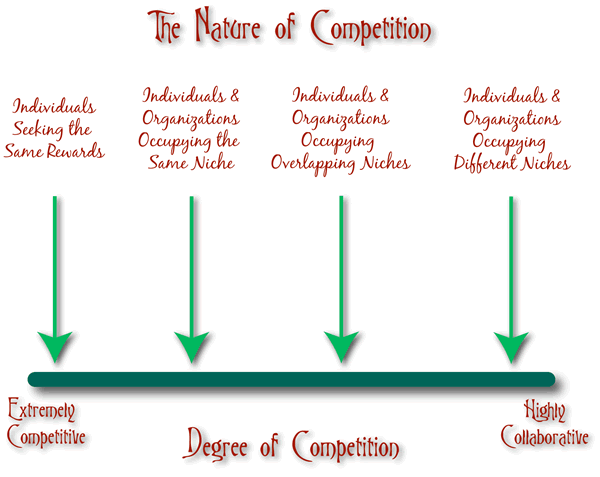
(Unfortunately, when applying to college, we are often individuals seeking to occupy the same niche, leading to a feeling of never being good enough.)

In today’s day and age, equality amongst men and women is assumed to exist. Many believe we have come so far from male dominance that we do not need to make any adjustments or acknowledgements of the still present gender differences that exist.

Applying for college has turned into one of the most stressful processes that children have to go through. It seems that “being an amazing girl often doesn't feel like enough these days when you're competing with all the other amazing girls around the country who are applying to the same elite colleges that you have been encouraged to aspire to practically all your life” (Female Perfectionism). It is not only a being compared to students in your school, city or state but to students throughout the nation. Who has higher SAT scores? ACT scores? Better GPA? Who played sports and did better in those sports? Who completed more hours of community service? Who was involved and held a leadership position in the most organizations? These are all questions asked by admissions counselors when considering whom to admit to their college or university.

When applying to college, I felt extremely well qualified. I was in the top 10% of my class. I was in Gifted and Talented and Advanced Placement classes.
(This is the girls high school swim team my junior year.) I was a swimmer for 12 years, four of those years swimming for both my high school varsity swim team and my club swim team. I was a cofounder of the chapter of Students Against Destructive Decisions (SADD) at my high school as well as president. I was a Peer Assistant Leader for 2 years, and the list goes on. I was basically involved in a ton of activities and served in many leadership roles. What school wouldn’t want me? That may sound conceited but in all honesty, that is how I felt.

I have two very successful parents and “admission to a brand-name college is viewed by many parents, and their children, as holding the best promise of professional success and economic well-being in an increasingly competitive world” (Female Perfectionism). My parents were not entirely different from the rest of the parent population. They hoped that I would choose a topnotch school to fuel my education and thrust me into a successful future. I applied to UT, Michigan, Kalamazoo College, UCLA, UC Davis and Berkeley. (Harvard is one of the schools that I did not even bother applying to.) I knew full well that I would not have the money to go and probably would not get into an ivy league considering their ridiculously high standards.

I often wondered what my outward appearance says about me; I “wondered what they saw and what they thought when they looked at her like that” (Kingston 131). Do I appear to be an outgoing and actively involved student who cares a great deal about my studies? The colleges don’t see me. They see a sheet of paper that is supposed to define me—my activities, grades, hopes for the future, everything. My life and college choice are determined by a few sheets of paper.

(No matter where each one of us ends up, we should strive to do all that is illustrated in this picture.) I still wonder what Berkeley and UCLA decided they didn’t like about me when they rejected my admissions to the university. I probably would not have gone to either of those schools, however the rejection stung. Still, being accepted would have put a smile on my face and been a “mental reward” for my hard work. This “never good enough” competition will continue through college and into medical school admissions. I am already working on building my resume for med school and hope that I am competitive when it comes time to apply.

Wednesday, April 2, 2008

Changes to be Made


(We cannot allow patient care to become impersonal as many things have.)

It seems that we have talked a lot about the need for compassion in medicine these days. Some claim that the “role as caregivers is to help relieve suffering in whatever way it arises, whether physical or mental” (Rinpoche 171). But is this really the case? How much do we and should we really expect from doctors when it comes to emotional support? Is it really a doctor’s responsibility to be our support system and encourager or simply a source of knowledge and expertise? Where do we draw the line between a doctor’s role as a professional and their role as a “counselor”? These are all questions that have arisen in my mind since beginning the discussion of compassion in medicine.

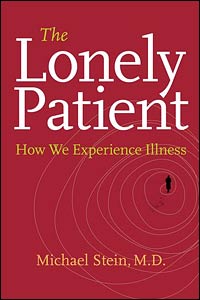
In my last entry about compassion in medicine, I discussed the role my skin doctor played when diagnosing me with psoriasis. Lacking emotion, I felt disconnected and uncared for. I switched doctors and found a doctor I was satisfied with. I felt at the time, and still feel, that this was a wise and fair decision. I had no loyalty to the doctor with an attitude. In this case, the line was clear as to how I was treated as opposed to how I should have been treated. In “The Lonely Patient,” the author, Michael Stein (great book!!) discusses the dilemma he faced when asked to visit one of his patients at home. It was not because it did not care about the patient. In fact, it was quite the opposite. Stein cared so much for his patient that he felt he would be intruding on his space. This brought up the idea that perhaps it isn’t a lack of compassion, but merely the lack of knowing where to draw that line.

This day and age, a person, no matter what profession, must be careful of how far they go with interacting with others. A teacher who reaches for a student can be fired for harassment. A boss who innocently comments on the appearance of an employee can be fired for inappropriate relations with a worker. (Is this appropriate?) Basically, anything one does can be misconstrued and held against them. It is an extremely unfortunate situation that this world has gotten into, and it is has spread into the medical field. Many doctors “believe that medical work demands some sort of distance, or at least the appearance of it” [1] and refuse to hug their patients. Why? Hugging is harmless—right??

If another doctor would to suggest a change in behavior or an increase in caring, they may receive an extremely negative reaction from the other. Often times, “others in positions of responsibility may have the attitude of not wanting to listen to others, confident that their own opinion is best” (Rinpoche 107). If one grows up with the idea that doctors are their simply for their knowledge, changing this mentality would be difficult to nearly impossible.

How can we develop future doctors with the idea that compassion and caring is necessary in the medical field? I believe it begins in the education system, an area that we can change. (We must introduce the idea of caring to the youth.) We cannot change the way future doctors are raised in terms of how their parents present ideas to them. We can, however, insert more compassion and courses about compassion into the education system. Perhaps along with organic chemistry and genetics, pre-med students should be required to take a “Compassion and Medicine” course that introduces these ideas to them. This may allow for a more caring and concerned generation of doctors.

[1] Michael Stein, The Lonely Patient (New York: Harpercollins Publishers, 2007) 171